
Social Constructionism
Social constructionism views knowledge, reality and its structures and phenomena as being formed naturally in social and linguistic interaction even though they are developed and produced consciously or unconsciously by certain cultures or societies.
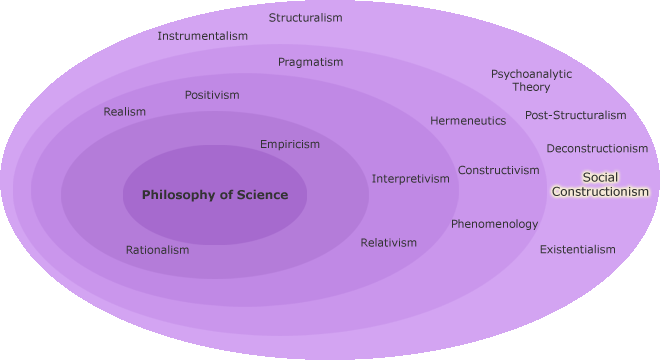
In social constructionism, a priori structures of knowledge and truth are questioned. The level of questioning varies according to the orientation in social construction: there exist looser and stricter views to the a priori structures of reality. The loose version views reality as existing in, but not depending on, human representations, like language. The strict version stresses the impossibility for human beings to be in straight connection to the world and reality, because between reality and people there always exists symbolical structures of meanings, like linguistic structures. Social constructionism is closely related to constructivism.
Links to more information:
Social Constructionism. Wikipedia, The Free Encyclopedia.
Mercadal, Trudy. 2024. Social Constructivism. Research Starters Home. EBSCOhost.